
The Science Behind the Strains
Phenotypic Plasticity: Why Commercial Cannabis Cultivators Need Structured R+D Programs
Cannabis is one of the most environmentally responsive plants on earth. Lighting regime, substrate choice, irrigation strategy, nutrient program, humidity, vapor pressure deficit, airflow, and even the microbial life in your growing environment- all of it shapes the final expression of a cultivar in ways that can be dramatic, unpredictable, and sometimes deeply surprising. This goes well beyond the obvious differences between indoor, greenhouse, and outdoor production environments. Even two facilities that appear nearly identical on paper can produce radically different results from the exact same genetics. A cultivar that one licensed medical cannabis producer considers their highest-performing variety can be completely unworkable in a facility just a few kilometers away.
This tendency is called phenotypic plasticity; the capacity of a single genotype to express meaningfully different physical and chemical traits depending on its growing environment. In cannabis, phenotypic plasticity is very exaggerated compared to other agronomically significant plants. The same cultivar can express dramatically different cannabinoid profiles, terpene concentrations, bud structure, internode spacing, flowering time, yield, and disease resistance depending on how and where it is grown. For commercial medical cannabis cultivators selecting genetics for their production facilities, this creates a fundamental and often underestimated challenge.
Why Phenotypic Plasticity Makes Cultivar Selection So Difficult
The conventional wisdom in the cannabis industry is that genetics are genetics — that if a cultivar tests well at one facility, it will perform similarly at another. In practice, this is rarely true at the level of precision that commercial medical production demands. Two cultivators with very similar facilities, similar environmental targets, and similar cultivation philosophies may find that the same cultivar delivers entirely different outcomes. One grower finds it to be the best plant they have ever run. The other finds it stretches too aggressively, finishes uneven, or simply fails to express the terpene profile they expected.
This is not a failure of the genetics or the grower. It is phenotypic plasticity at work, and understanding it is essential for any licensed medical cannabis producer building a reliable, high-performing cultivation menu.
The variables that drive phenotypic expression in cannabis are numerous and interact in complex ways. Differences in light spectrum and intensity affect stretch behavior, trichome development, and cannabinoid accumulation. Substrate composition — whether coco, rockwool, living soil, or hydroponic systems — influences nutrient uptake and root zone biology in ways that ripple through the entire plant's development. Irrigation frequency and strategy, particularly in precision fertigation programs, can push or pull a cultivar toward very different yield and quality outcomes. Even the microbiology of a facility — the yeasts, molds, and bacteria present in the air and on surfaces — can influence how a cultivar finishes.
For commercial medical cultivators operating under GACP standards and producing for regulated markets, the stakes of getting cultivar selection wrong are high. A variety that underperforms ties up canopy space, production resources, and regulatory bandwidth without delivering the quality or yield that justifies its place on the menu.
The Problem with Trialing New Cannabis Genetics in GACP Facilities
The only reliable way to understand how a cultivar will perform in your specific facility is to grow it there. This sounds straightforward, but for licensed medical cannabis producers operating under Good Agricultural and Collection Practice standards, running cultivar trials is genuinely difficult.
GACP facilities are designed for consistency and compliance, not experimentation. Introducing new plant material — even clean, pathogen-tested clones — creates biosecurity risks that must be carefully managed. Plant pathogens including Hop Latent Viroid, Botrytis, powdery mildew, and various pest species can enter a facility on incoming plant material and spread rapidly through a commercial batch. Hermaphroditic plants introduced during trials can release pollen that contaminates an entire flowering room. The cost of a contamination event in a GACP medical facility — both in terms of lost production and regulatory consequences — can far exceed the value of any single cultivar trial.
At the same time, segregating tester plants from commercial batches in a GACP environment is operationally complex. Testers cannot be sold as GMP medical product, making them a pure cost. Running testers in separate rooms adds facility overhead. Running them in the same rooms as commercial batches introduces the contamination risks described above. And limiting trial size to manage these risks means you end up with insufficient data to make a confident cultivar selection decision.
Organizing trials in a way that generates strong, actionable evidence — while protecting your facility from contamination, managing yield disruption, and staying within your compliance framework — is a genuine tightrope that every serious commercial medical cannabis producer has to walk.
How the Voyager Tester Program Addresses Phenotypic Plasticity
This challenge is exactly why we designed the Voyager Tester Program the way we did.
Rather than asking cultivators to source and trial individual genetics on their own — with all the attendant biosecurity risk, compliance complexity, and uncertainty that entails — the Tester Program provides a structured, supported framework for cultivar evaluation in your specific facility and environment.
Tester partners receive five cultivars simultaneously, all verified and tested clean from known cannabis pathogens, insects, and pests before shipment. Every clone that leaves our licensed partner facility in Portugal carries GACP production standards, a phytosanitary certificate, and a certificate of origin — giving you the documentation chain your compliance program requires from day one.
Beyond the plant material itself, we work directly with tester partners to design trials that are appropriate for their facility size, production schedule, and compliance requirements. We help you think through segregation strategy, data collection, and how to interpret results in the context of your specific growing environment. Because phenotypic plasticity means that performance data from other facilities is only partially transferable, the most valuable data is always data generated in your own rooms — and we help you generate it systematically.
Critically, the Tester Program is designed to compound in value over time. Each trial cycle builds directly on the results of previous trials. We accumulate a detailed understanding of your facility's specific environmental fingerprint — how your rooms run, how your substrate and irrigation strategy interact with different cultivar profiles, which genetic characteristics thrive in your conditions and which struggle. Over successive cycles, our collective ability to predict which cultivars will succeed in your facility improves substantially. The rate of successful cultivar adoptions increases the longer we work together.
A Model Built for the Long Term
For commercial medical cannabis cultivators, the Tester Program delivers a reliable, continuously improving R&D pipeline that keeps your production menu current with market trends, ensures your plant material is clean and compliant from source, and removes the operational and financial risk of sourcing genetics through informal or unverified channels. You are not paying for five random clones and hoping for the best. You are entering a structured partnership with a genetics supplier who is invested in your success and who brings institutional knowledge of how your facility performs with each successive cycle.
For Voyager, the model works because our tester partners are genuinely committed to licensing the genetics that perform for them. We are not in the business of sending out samples indiscriminately. We work with a small number of high-quality clients, and the Tester Program is designed to identify and build the long-term licensing relationships where we can deliver the most value.
Phenotypic plasticity is not a problem to be solved — it is a fundamental characteristic of cannabis that every serious commercial producer has to understand and manage. The Voyager Tester Program is our answer to that challenge: a systematic, compliant, and continuously improving approach to cultivar selection that is built for the realities of licensed medical cannabis production in Europe and beyond.

Commercial Medical Cannabis Selection Process
We are serious about the selection process since we are focused on created elite clone-only varieties, not an endless stream of new seed lines. The agronomic studies that form the foundation of the selection process include over 75 categories that are recorded all the way from germination and clone performance to flowering, post processing, and laboratory analysis in multiple environments.
We are so serious, in fact, that the founder of Voyager Genetics, Chris Leavitt, wrote a chapter in a textbook and is creating coursework for the University of Barcelona on this very subject.
Get in touch to receive more detailed information about each cultivar’s performance and attributes.
Download The Chapter Below!


Black Rose Pollination and Story
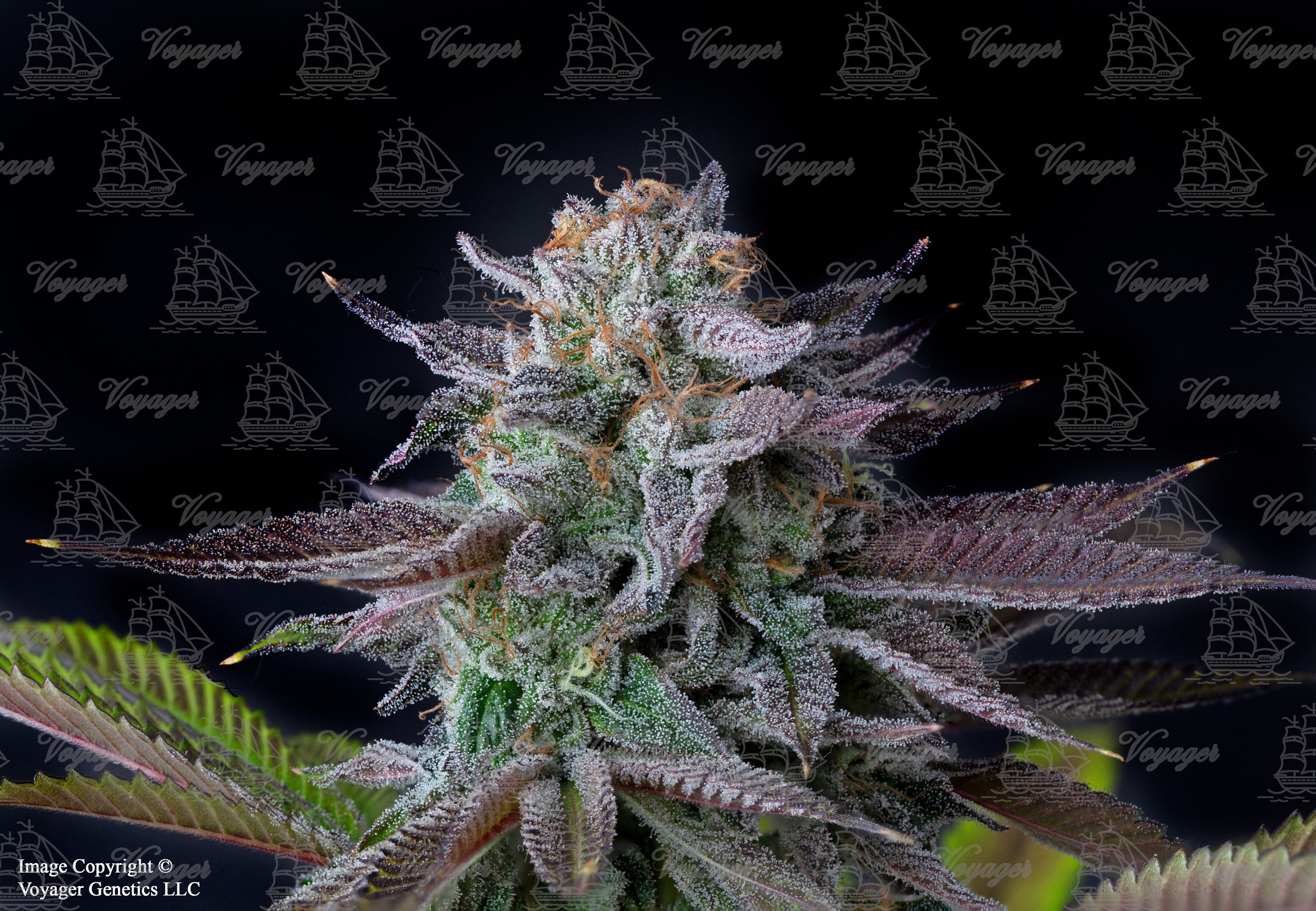
Heath Robinson’s Black Rose is a legendary strain that has been held by enthusiasts and breeders for over a decade. Special thanks to Fyg Tree out of Santa Cruz, California for diligently making filial generations of this plant all the way to F13! We acquired seeds of the Black Rose F13 and selected a female from that lot and reversed it to make this pollination. The defining characteristic of this plant is its incredible purple expressions, that can even be seen on new leaves in veg and as early as Week 3 of flowering. Since so many popular strains that are purple originate from Gelato phenotypes, we thought it would be cool to create a new lineage from some old school gear and cross it to some new and exciting cultivars.
Black Rose Bx is (Black Rose x Newberry) x Black Rose. This cultivar is known for very short flowering times and intense purple coloration that begins very early- sometimes even during vegetative growth! It has a sweet aroma of berries with mostly dark fruit such as blackberry, currant and blueberry coming through. Some phenotypes can test very low in THC, so a big part of the project is ensuring that selections from this line test sufficiently high.
