Cannabis Propagation 101
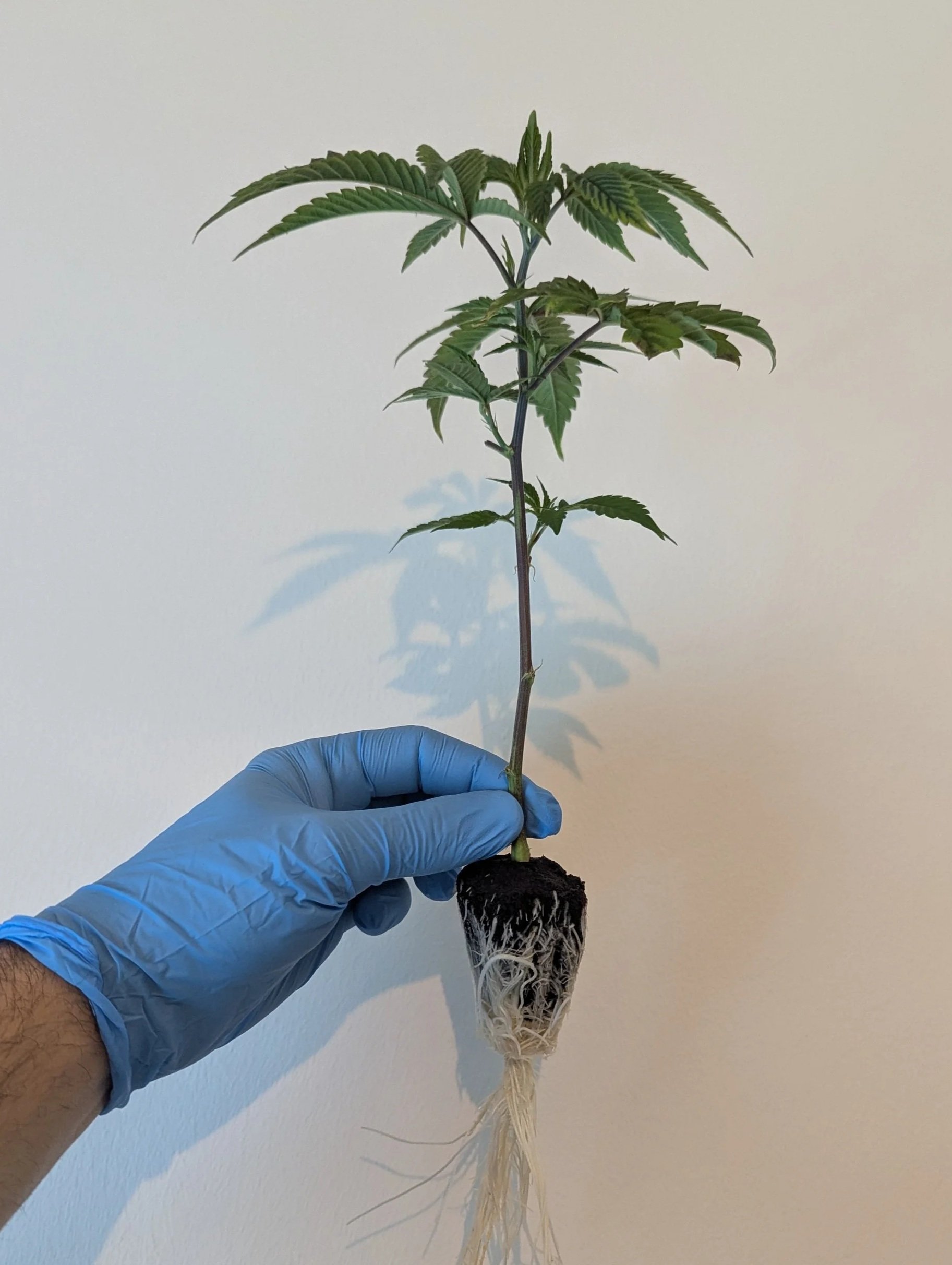
When I travel and see cultivations all over the world, I’m still somewhat surprised that propagation remains a challenge for many commercial producers. The fact is that there is still a lot of misinformation or incomplete information on how to properly propagate cannabis, as well as quite a few tricks and tips. Here I will share some of the most important aspects, concepts and tricks involving propagation.
Temperature
A minimum temperature of 25.5C/78F is essential for propagation. There is a huge drop off in success if you go lower than this. I’ve done temperature experiments before and for some reason, at the 25.5C mark, there is a huge uptick in rooting success. The optimal temperature is 25.5-27.7C or 78-82F. This keeps us above the minimum temperature while allowing for favorable VPDs and giving us some margin for error that is removed if we approach higher temperatures.
Humidity
Humidity needs to be high enough to prevent wilting, but not too high that the stomata close on the plant. You need a functioning plant to maintain energy and growth to promote rooting, and a plant that cannot transpire can’t properly photosynthesize. Domes are helpful to promote high humidity in early stages, but your clone room should be between 70-80% humidity.
Controlled Stress
This is the biggest trick of propagation. Many cultivators baby their clones too much, not realizing that this is actually hurting them. The plant needs the signal of the hormone, but also needs the signal of an inability to manage its turgidity and internal osmotic pressure. Without that stress signal, it will just sit there. This is because the plant must undergo a process called organogenesis to be able to grow new roots, and its one of the most costly (in terms of energy) functions that the plant can perform. It must get a strong signal to risk that much energy on this new function.
Air movement
We need significant air movement to prevent excessively stale air in the domes or in the racking. This can lead to fungal growth and also hinder leaf transpiration. This becomes a challenge in propagation rooms that have racks on multiple levels. Many small fans has been a better solution than large overhead or floor fans, as it almost always results in some racks getting gusts of wind while others get nothing. We want humidity, CO2, oxygen and ethylene gas homogeneity, not wind on the clones.
Oxygenation of substrate
This also has to do with humidity since water vapor displaces oxygen and CO2 in air. Nobody talks about that! Plants need oxygen to complete cellular respiration, a process that all plants, animals and most fungi do the same way. The way they get that oxygen is through roots, so root zone oxygenation is an essential function of the plant to survive. It seems to be a major trigger and promoter of root growth as well.
Substrate
As mentioned before, we want oxygenated substrates. We also want substrates that provide ample rigidity and sturdiness of the clone in the substrate- wobbling seems to push back root formation progress for reasons unknown that can be speculated. Either way, tight contact and no air space between the wounded stem, hormone and substrate seem to work best. Peat seems to be either way too wet or way to drive for cannabis propagation. I like coco-based substrate and rockwool better.
Nutrients
This is surprisingly unimportant, which challenged a lot of presuppositions I've had in the past. It doesn’t matter that much!
However, I would recommend at least a 1.0 EC of nutrients once the plants have rooted- you will see pale green growth on the tops if you water with less, indicating a nitrogen/general deficiency. But I have cloned with full strength vegetative nutrients at 2.5EC without any issues…to me, this isn’t a game changer for the process. However, for optimization, the EC should match the light levels of your propagation setup.
Light Spectra/Intensity
Clones like blue light. You want at least a 6000K color temperature of your lights- 8000-9000K even better. At least 100ppfd without domes is required to get decent growth, and you may find that if you have good conditions, higher ppfd can accelerate rooting and growth. However, make sure to increase nutrient EC to correspond with the higher PPFD.
Hormone freshness
IBA can degrade! It is heat labile and can break down into IAA (oxindole-3-acetic acid( and other polymerized/insoluble oxidation products. Once it starts, it can go rapidly. If you have a sharp drop off of rooting, it can be this! Store it properly (refrigerate) and don’t allow it to come in contact with high temperatures and UV light. If the white IBA powder turns yellow, the process has begun.
Pro-tip- dissolve the IBA in a tiny amount of alcohol then dissolve alcohol in water for a clone dip that prevents an embolism caused by the dry powder
Mother Health
The most important aspect of propagation. Stressed mothers and under-irrigated mothers yield poor clones. This is because the plant needs an excess of sugars and energy to do what is called organogenesis- creation of a new organ. In this case, roots. The plant must sacrifice an enormous amount of energy to begin this process, and will be more slow and ‘hesitant’ to do so if it is at a energy deficit. Always delay cutting mothers if they are stressed for some reason, and ensure that they are well-irrigated at least an hour before taking cuttings- more like 4-6 hours if they were close to wilt.
If you want step by step protocols that implement these changes, send me DM!
If you implement these improvements to your propagation setup, you will see a huge improvement on quality!